Displaced
For those fleeing conflict, grief often lasts longer far than war

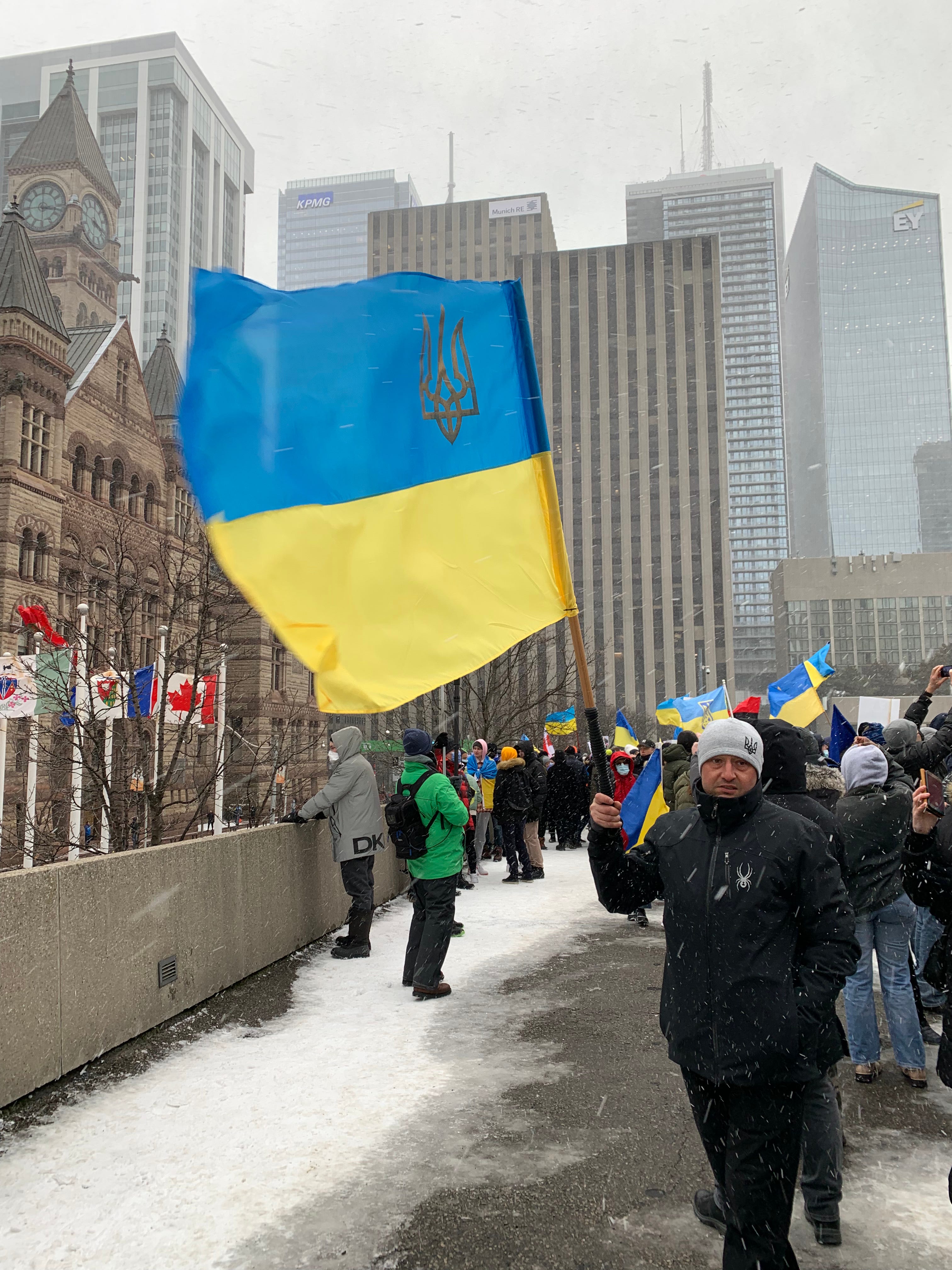
Three weeks ago, I found myself attending a protest against Russian aggression outside Toronto City Hall on a very snowy Sunday afternoon. There were hundreds of people — all bracing against a sharp wind —holding up signs and decrying the war. I felt both depressed at what was bringing us there, and cheered in the solidarity of dissent. The city was weary from weeks of a different, and much more hostile, type of protest—weeks of yelling and car horns, as people angry about vaccine mandates marched in the street. And then, after watching with relief as the trucking convoy was forcibly removed from Ottawa, abruptly it was me who was in the street, the human toll of Russia’s war was too serious to stay inside.
In the wake of this new war against Ukraine, I spoke to Mulugeta Abai, Executive Director of the Canadian Centre for Victims of Torture, to ask him about the grief that comes with being a refugee. Abai was forced to flee Ethiopia in the 1980s, and he understands the loss that comes from abruptly severing ties with everything recognizable. “One loss is of familiar environment. It might subside, but that's always a big loss,” Abai said. “People do not live only on money…The other currency is losing friends and losing employment, losing family members.” He described the fish-out-of-water feeling of new environments as “another form of grief”.
And 26 days after Russia’s invasion the news has become increasingly grim. BBC reports that over three million Ukrainians have fled the country in the last three weeks, citing United Nations data. Around 1.5 million of those leaving the country are believed to be children, some of them crossing borders alone as their parents stay behind to fight.
As restorative as it can be to watch the outpouring of support for Ukrainians fleeing war, it is also hard not to notice the difference in treatment afforded Ukrainian refugees as opposed to the waves of Syrians, Afghans and other non-European refugees who have been risking Libyan detention centers and capsizing in the Aegean Sea only to be held in camps in Greece or hustled onwards through eastern Europe’s borders to be another country’s problem. Hungary’s Viktor Orbán has championed an open border for Ukrainians, a radical about-face from 2015 when he oversaw the erection of a razor wire fence and closed the border with Serbia altogether in an effort to keep refugees out.
Abai stands in solidarity with Ukrainians now fleeing, saying that nobody should have to go through what they are experiencing. He also, however, is aware of the disparity in treatment between Ukrainians and other non-European refugees. “It is telling me that there is no level playing field,” said Abai. “We are told that we are equal, but we are not — that, for me, that triggers grief.”
While so much attention is focused on the fighting between Ukraine and Russia, there is an ongoing war in Ethiopia’s northern Tigray region that remains underreported. There are humanitarian crises in Yemen and Afghanistan. And all of these, among others, are forcing people to leave their homes. The global attention span can be brief — my attention span for war and humanitarian emergencies far from me sputters in short bursts. I don’t think of Afghanistan every day. My mental bandwidth for sorrow is often absorbed with the personal, and that is not necessarily a good thing but it is a reality. If you are caught up in a conflict, however, or it touches those you love, you don’t have the luxury of focusing on anything else. And for all the Ukrainians fleeing across borders and their inter-country web of family, colleagues and friends, this is devastatingly personal. For me, it’s just alarming and sad.
I asked Abai if the grief he holds as refugee has ever really gone away? “No, it doesn't go away. It is always there,” he said. “It might be kept in the back of the brain, maybe for a while, but there are still triggers that bring it back. It will surface one day.”
MDL